Seat belts
When you use seat belts correctly, they can help prevent serious injury in situations ranging from sudden braking to severe collisions.
Seat belt features
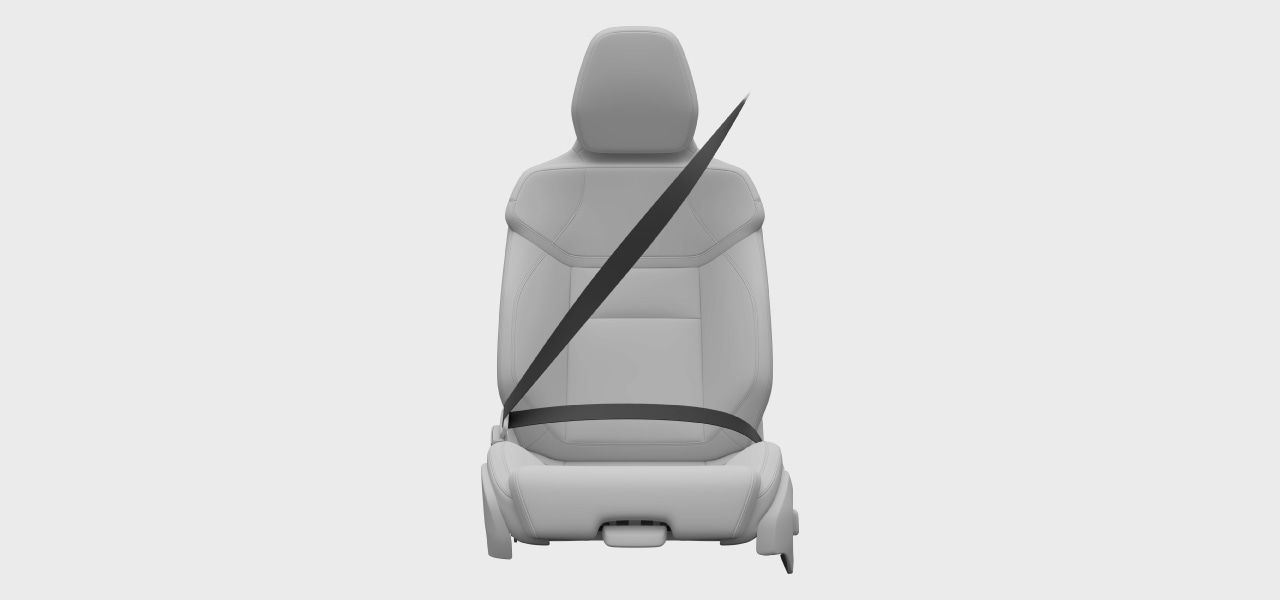
The seat belts use multiple sensors in and outside the vehicle to adjust themselves according to the situation.
- The vehicle can dynamically adjust the tension of the driver's seat belt to alert the driver.
- The belt locks itself to act as a safety restraint under certain conditions, such as sudden and forceful pulling of the belt, if the vehicle is driven aggressively or if it is on a steep incline.
- The front seat belts can also adjust as a safety precaution in a high-risk situation. Built-in seat belt pretensioners can tighten the seat belts extremely quickly in response to a collision. During a collision event, the belt can lock and unlock in multiple stages to reduce the pressure put on the passenger's body.
- When installing certain child restraints[1], all of the vehicle's seat belts except the driver's seat belt can be set to only retract.
Note
Safety reminder
When you've fastened your seat belt and start driving, the front seat belts will tighten slightly and then let go. This helps to reduce slack if there are any loose sections of the belt. It can also act as a reminder to maintain a good sitting posture throughout the drive.
Seat belt reminder
The vehicle uses built-in sensors to detect if the driver or any of the passengers aren't using their seat belts. The system alerts the driver with a warning sound, and the seat belt reminder symbol appears in the overhead console.

Important
Wearing seat belts
These are the essentials for wearing seat belts properly. There is also more detailed information in other sections of the manual covering proper seating and seat belt adjustments.
- Make sure that everyone in the vehicle wears their seat belt and that all belts are properly adjusted.
- Adjust the upper attachment point of the seat belt to fit the wearer's size.
- Wear the seat belt closely against the body.
- Minimize slack in all belt segments.
- Allow the belt to run as straight as possible between its three anchor points.[2]
- Have the backrest in an upright position.
- Follow all seating and posture recommendations.[3]
- Do not wear the seat belt in ways other than those described in this manual.
- Always use seat belts when driving.
- Never use the same seat belt for more than one individual at a time.
Warning
Seat belt care and maintenance
- Never modify or repair seat belts or related parts, such as fittings and hooks, yourself. Any service or replacement must be done by a trained technician with access to type-approved parts.[4]
- Contact an authorized Volvo workshop if the seat belt or a related part shows signs of damage or wear.
- Replace the seat belt if it has been subjected to a heavy load, such as in a collision. It may have lost protective properties even if there is no apparent damage.
- Clean the seat belt as soon as possible if anything is spilled onto it. The spilled substance can enter the mechanism and deteriorate the material.
